AR Worldcraft at NuVu Summer
2025
Teaching
About
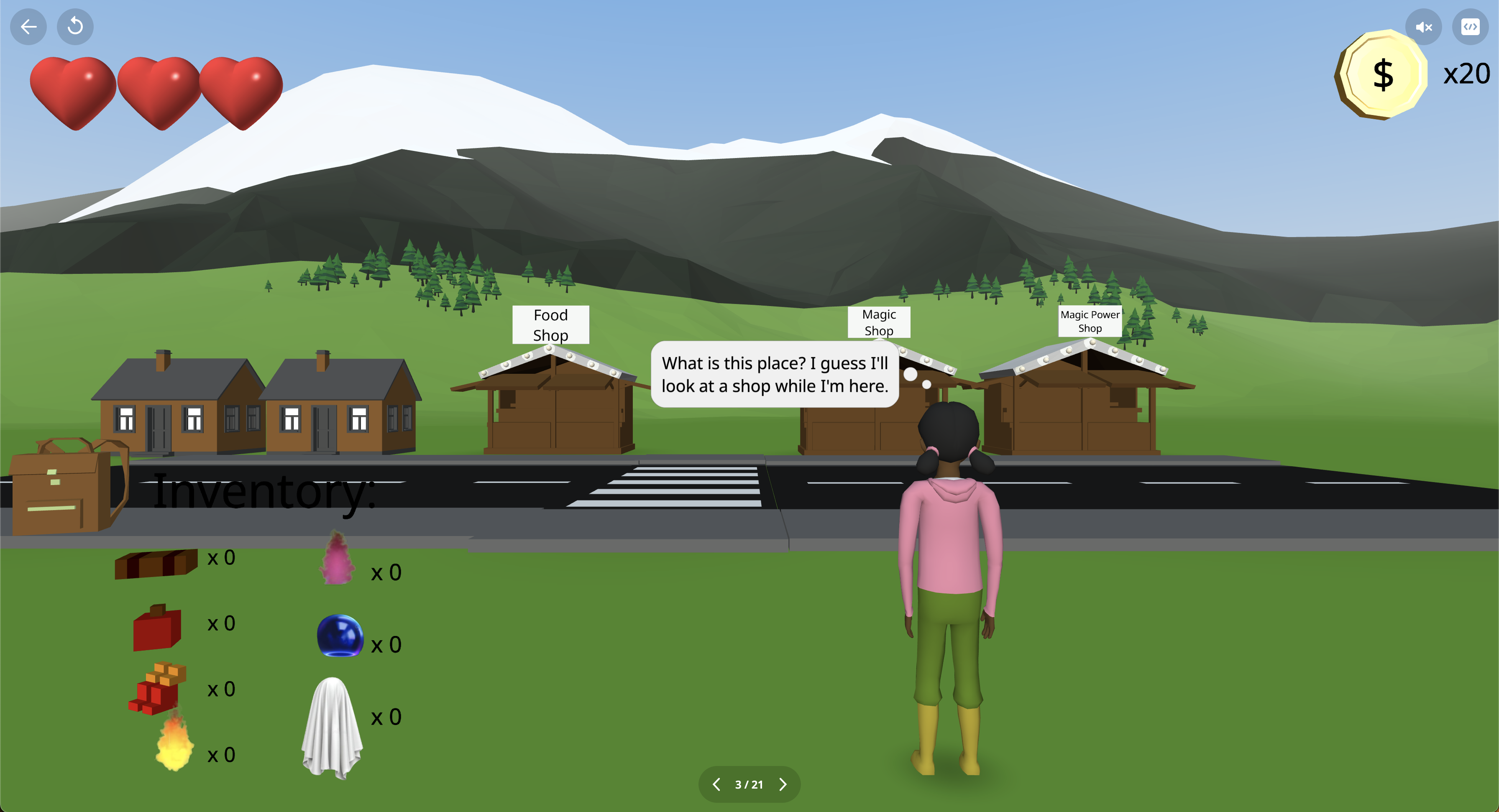
In summer 2025, I led a game development studio for middle schoolers at NuVu Innovation School in Cambridge, MA. My goal was to create an approachable, empowering setting for kids to encounter programming and the maker process for the first time. I adapted a curriculum, taught daily seminars, and guided students from initial concept to playable prototype through brainstorming, design, storytelling, world-building, and programming.
What Students Did
- • Unpacked what makes games work: narrative, world design, gameplay
- • Brainstormed environments, mechanics, and narratives under time constraints
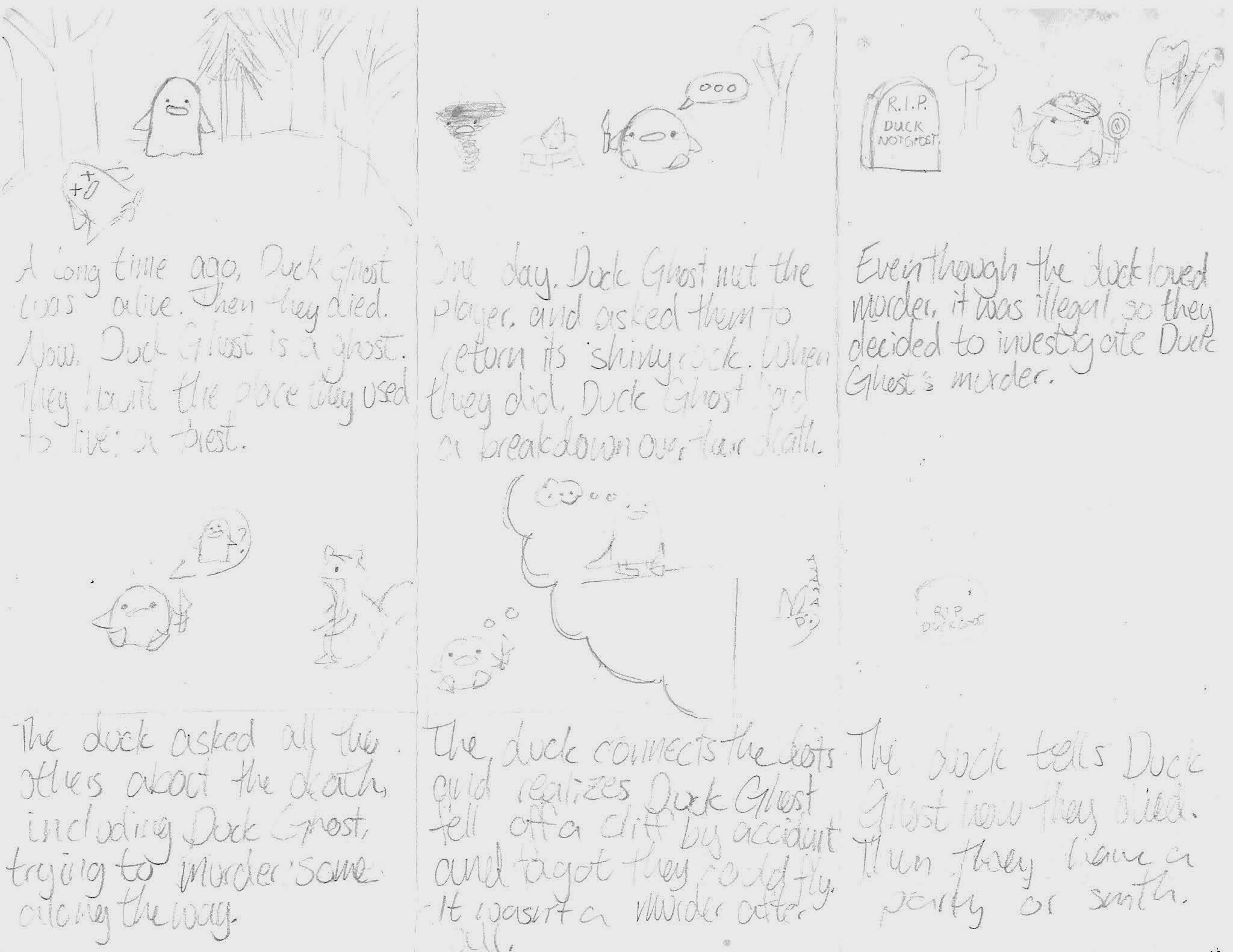
- • Combined favorite ideas into one concept and storyboarded it
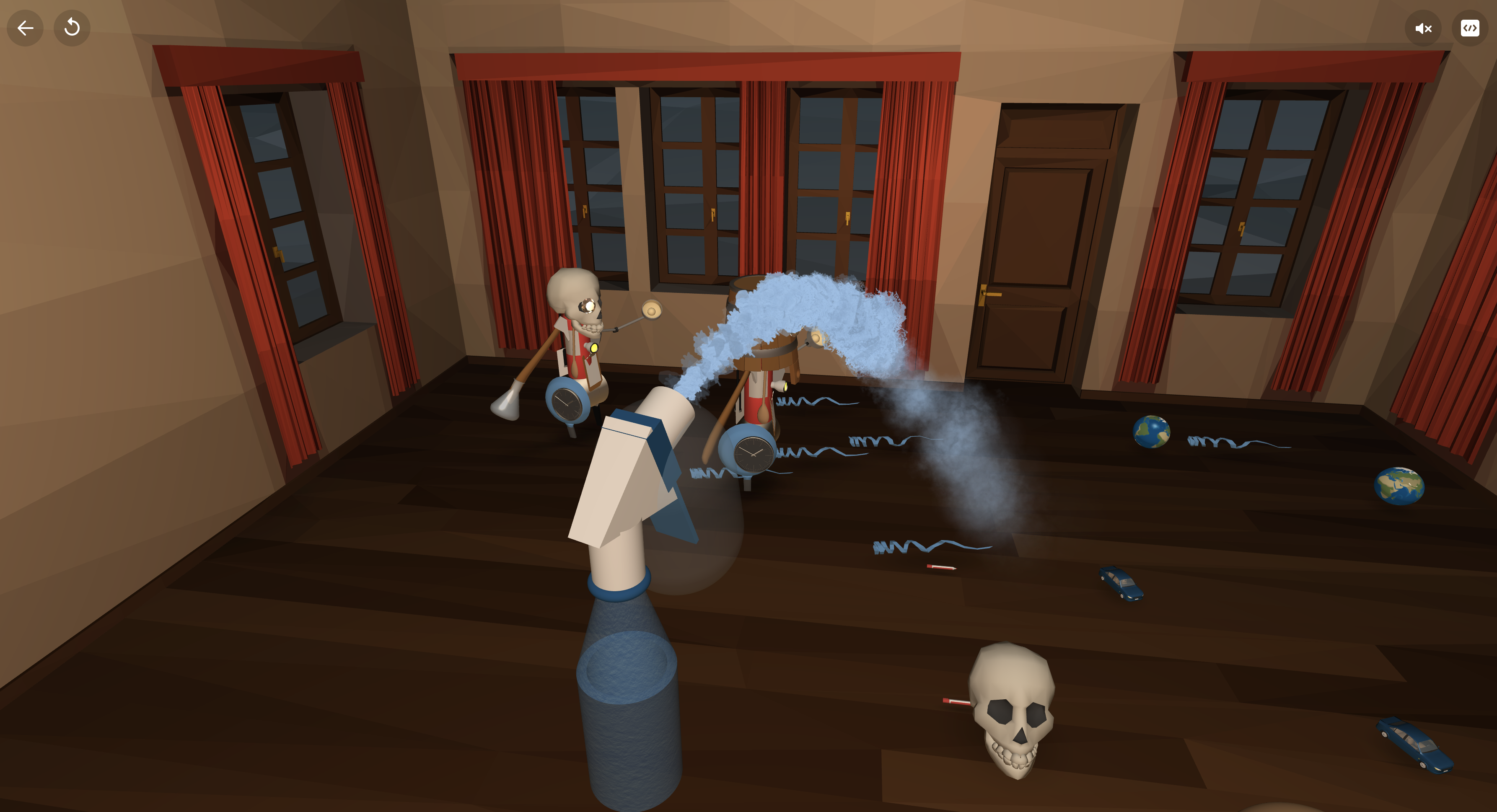
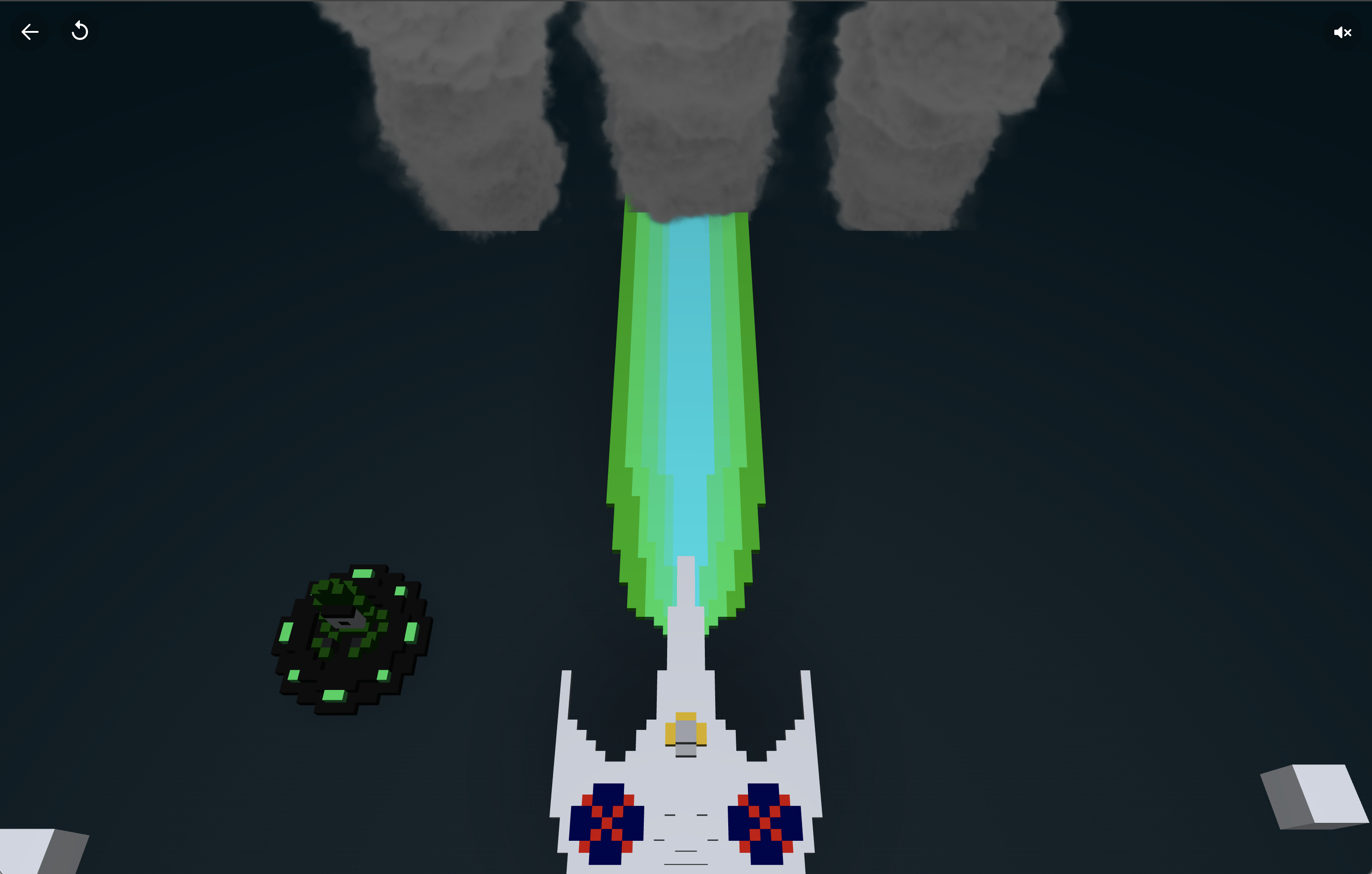
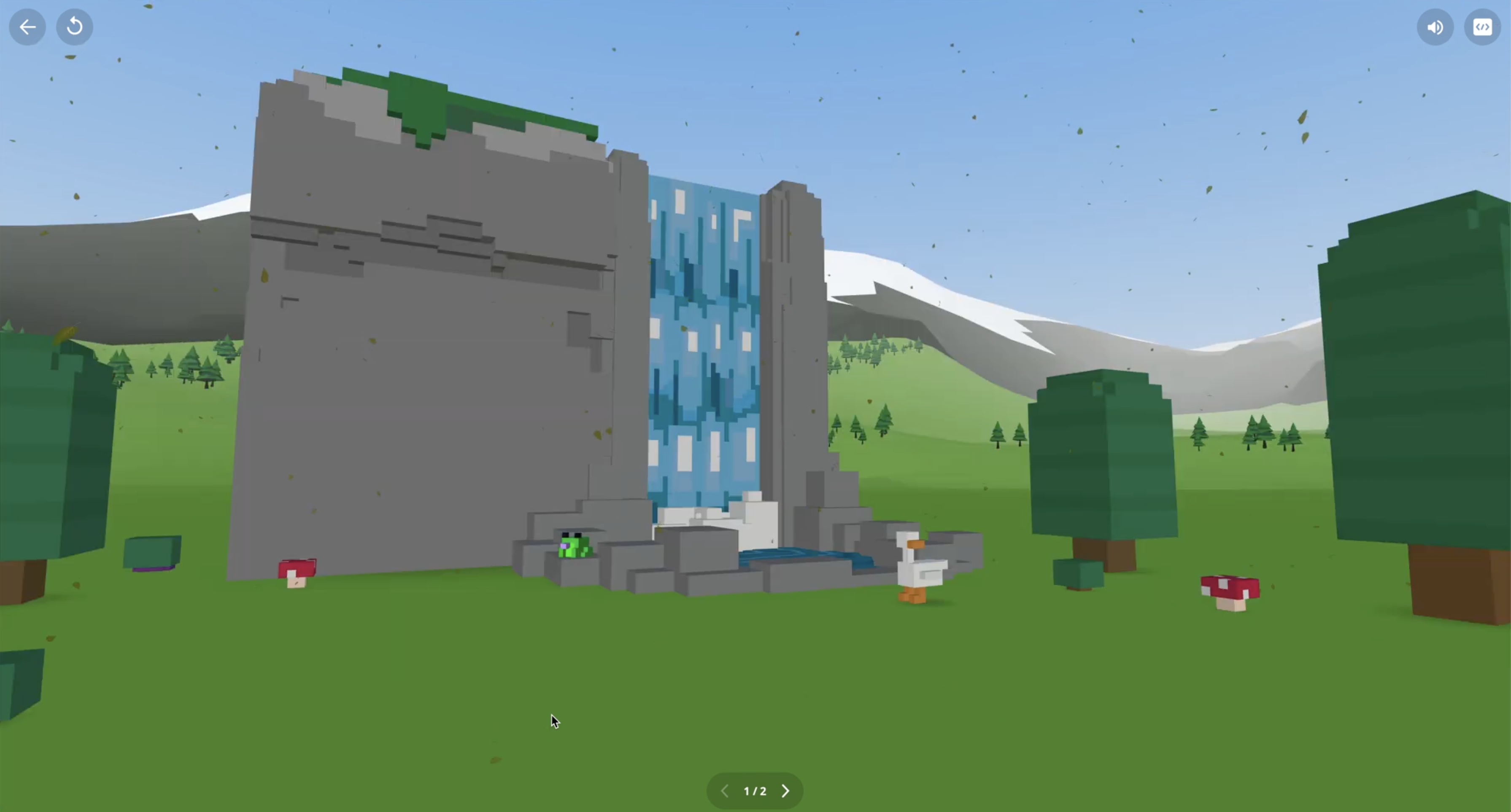
- • Built assets and prototyped in Delightex Edu (formerly CoSpaces Edu), a block-based 3D engine with AR/VR capabilities
- • Built, debugged, and playtested their games
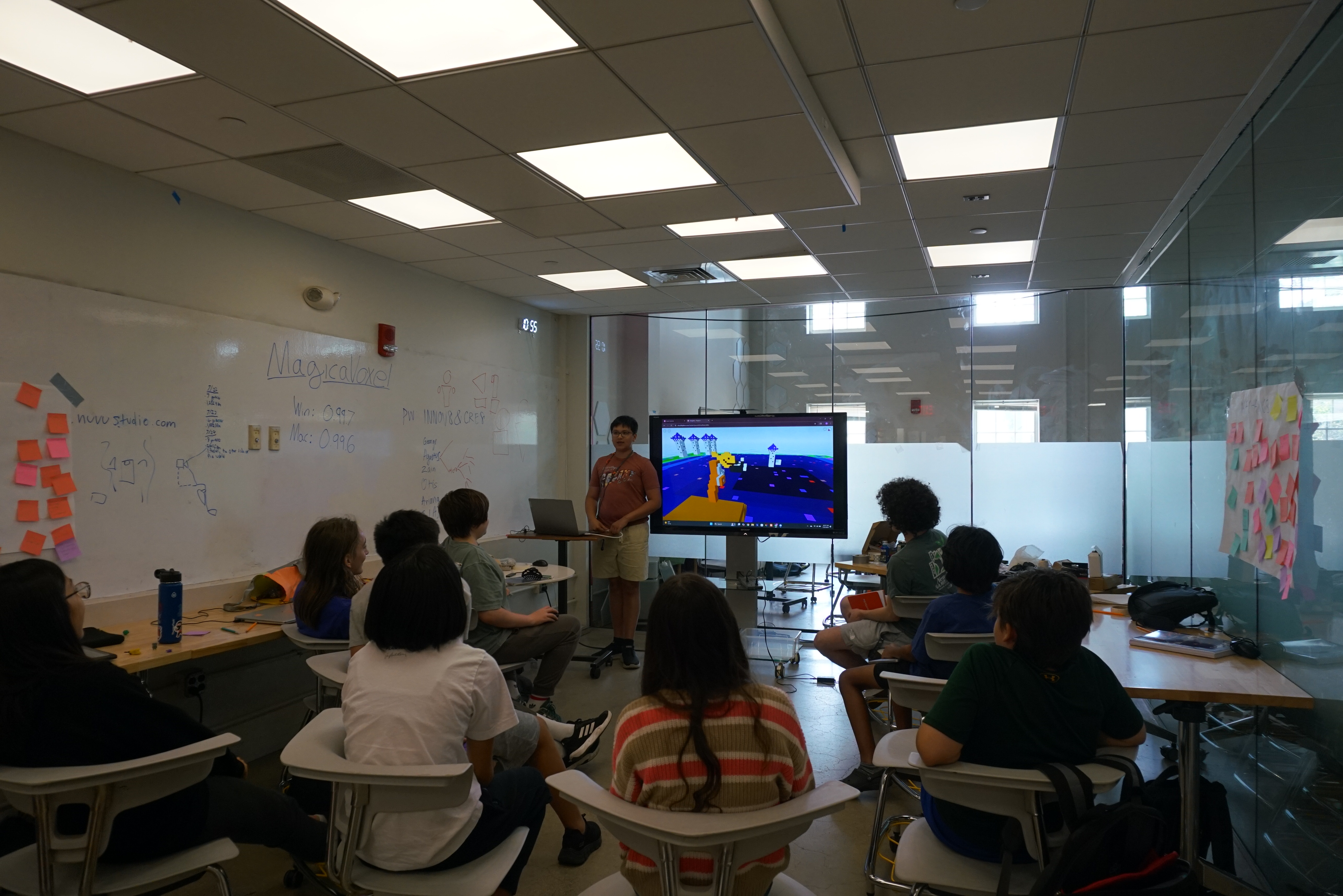
- • Presented finished games and process at a final exposition
Teaching Approach
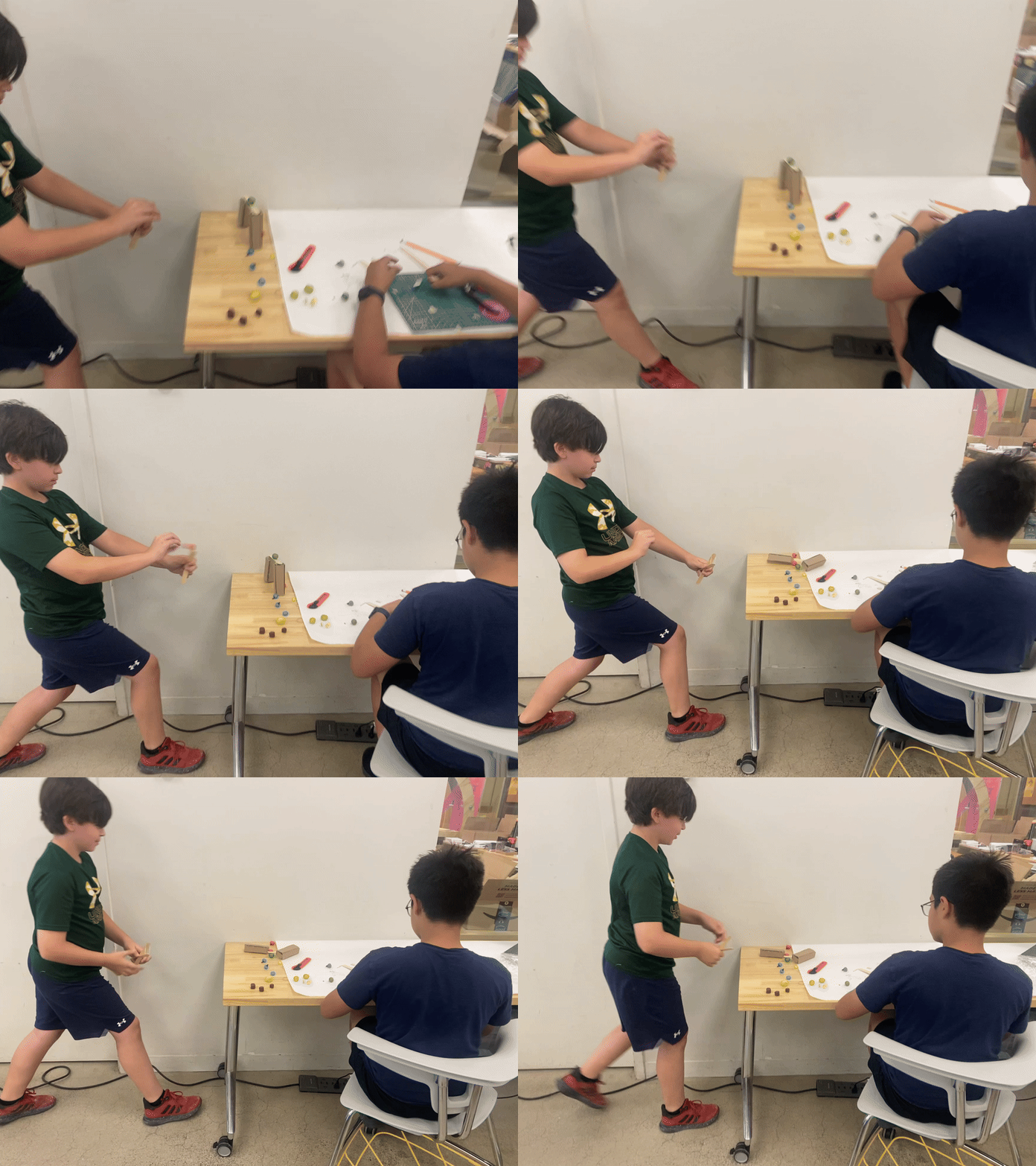
Building something from concept to finish can feel intimidating, especially when the process is so often made to look clean and straightforward. I wanted students to approach new technology with curiosity instead of fear — treating confusion as a playful entry point, not a reason to stop. A hands-on studio format, rather than a lecture-based classroom, let me watch each student work and meet them where they were, with multiple ways to engage, take in information, and show what they knew.
Beyond programming and design skills, I taught goal-setting, collaboration, reflection, and feedback. Above all, I wanted students to feel what it's like to experiment, mess up, and go back to the drawing board. This class was less about games or code, and more about learning to try things and test them. Using the syllabus as a guide rather than a ruleset, I worked with each student's individual strengths and pace, and made sure they left with real confidence navigating an unfamiliar, non-linear process — a foundation in design thinking and problem-solving that goes well beyond programming.
Reflection
Teaching this course deepened my interest in designing tools and learning environments that turn complexity into something approachable — the same instinct that drives my design work outside the classroom. The most meaningful outcome was watching students build real confidence navigating an unfamiliar technology, which is exactly the kind of experience I want my work to create