Vanished Puzzle Quest
2024
UX Research, Playtesting
Collaborators: Unity Productions Foundation, Saltium Games
About
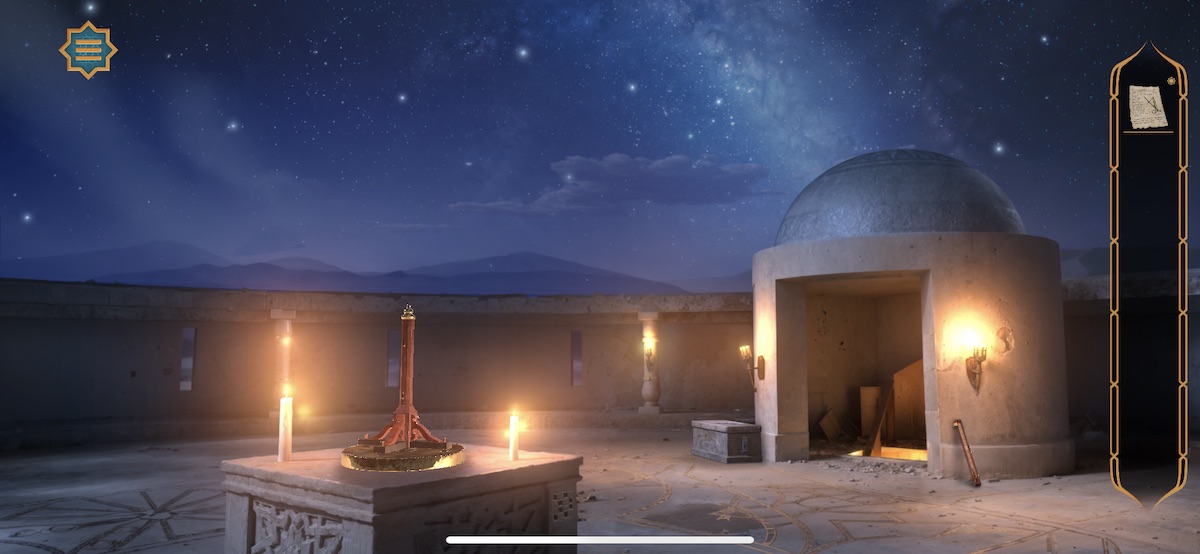
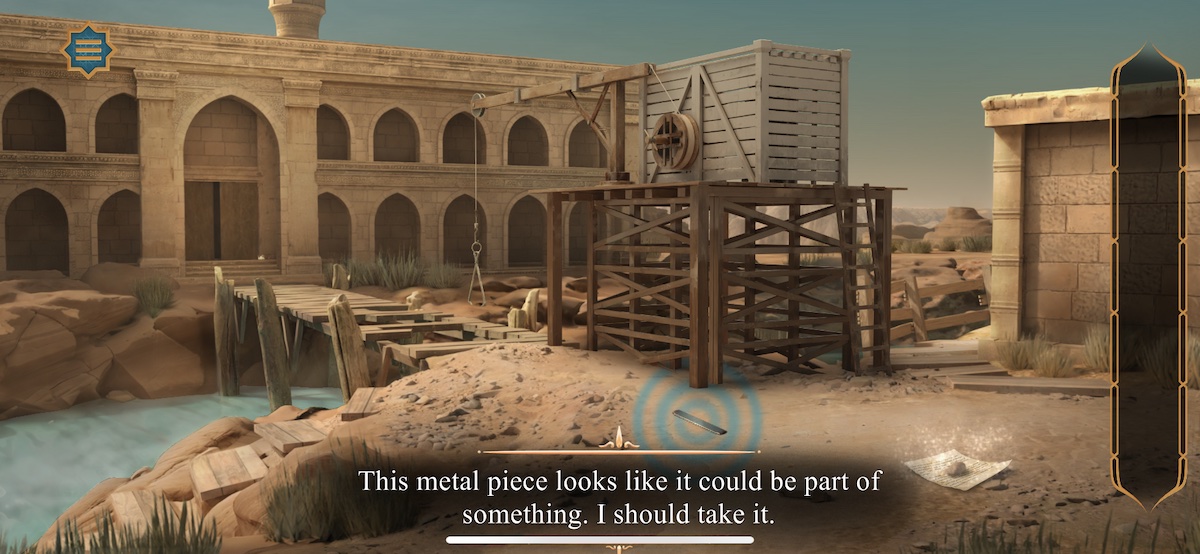
Vanished is a first-person puzzle game set in the Islamic Golden Age, where players rebuild ancient tools and instruments to unravel a mystery and piece together lost history. I joined during development as a playtester and UX contributor — my role was scoped to research and feedback rather than implementation, so the redesign below is a speculative proposal I built to demonstrate design thinking, not a shipped feature.
Research
We playtested regularly with volunteers and logged feedback by type — usability issues, bugs, observed behavior, stated pain points, visual issues. I synthesized these logs to find patterns across players, then designed solutions that balanced player experience, dev process, and stakeholder constraints against the game's goals of challenge, discovery, and learning.
Redesign: Inventory Management
Playtesting surfaced three recurring issues: object discoverability, progression confusion, and
inventory comprehension. Since the core gameplay is about collecting, combining, and learning
about historical artifacts, understanding what an object is is fundamental to progressing. The
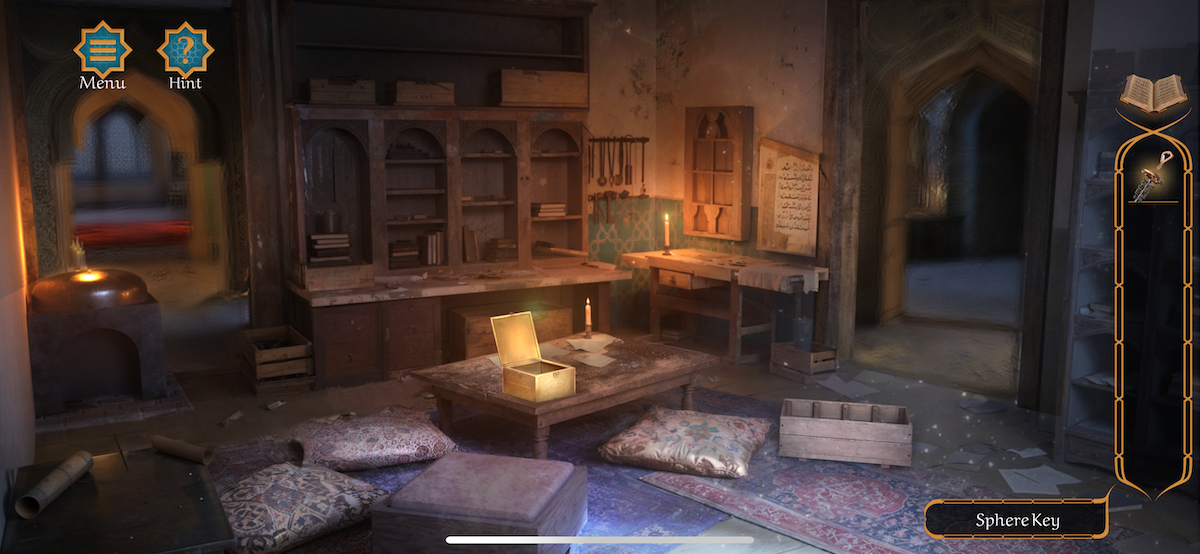
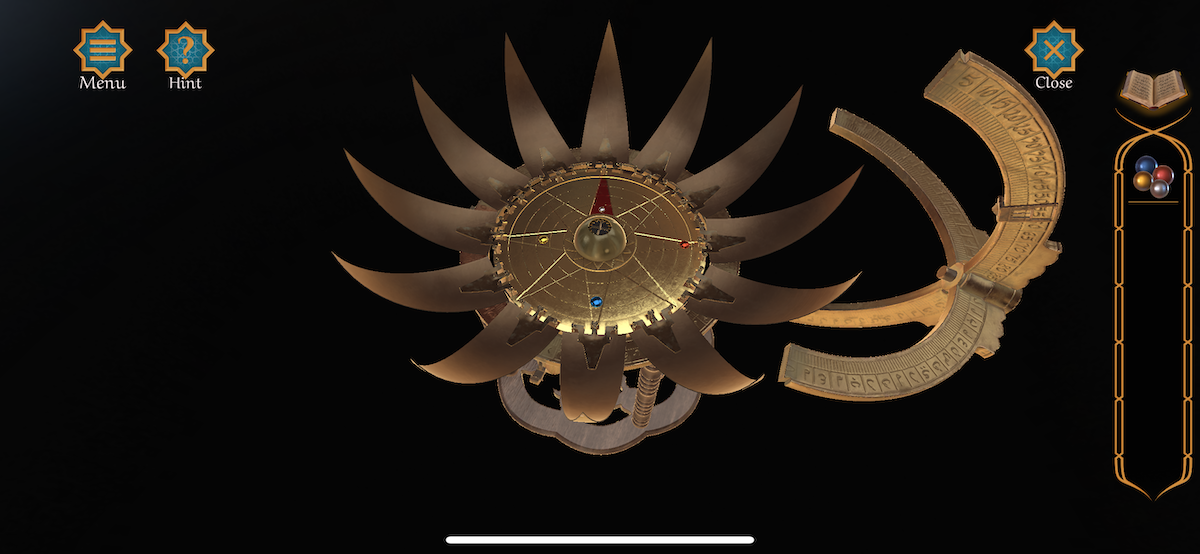
existing inventory showed collected items as unlabeled icons with no inspection or context —
players often felt uncertain what they were holding, and that uncertainty pushed them toward
brute-forcing combinations instead of reasoning through puzzles.
I proposed a more supportive inventory system that would give players clearer context without stripping down the puzzle design itself.
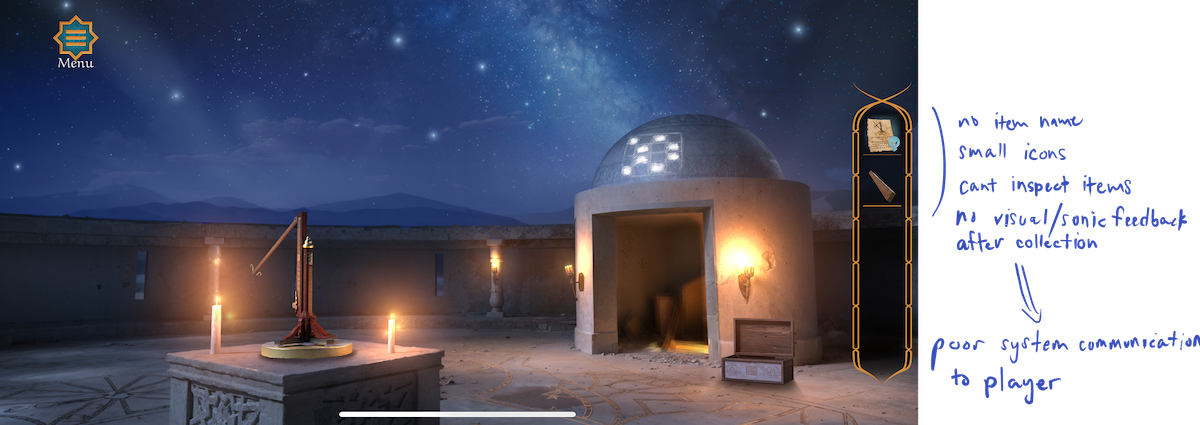
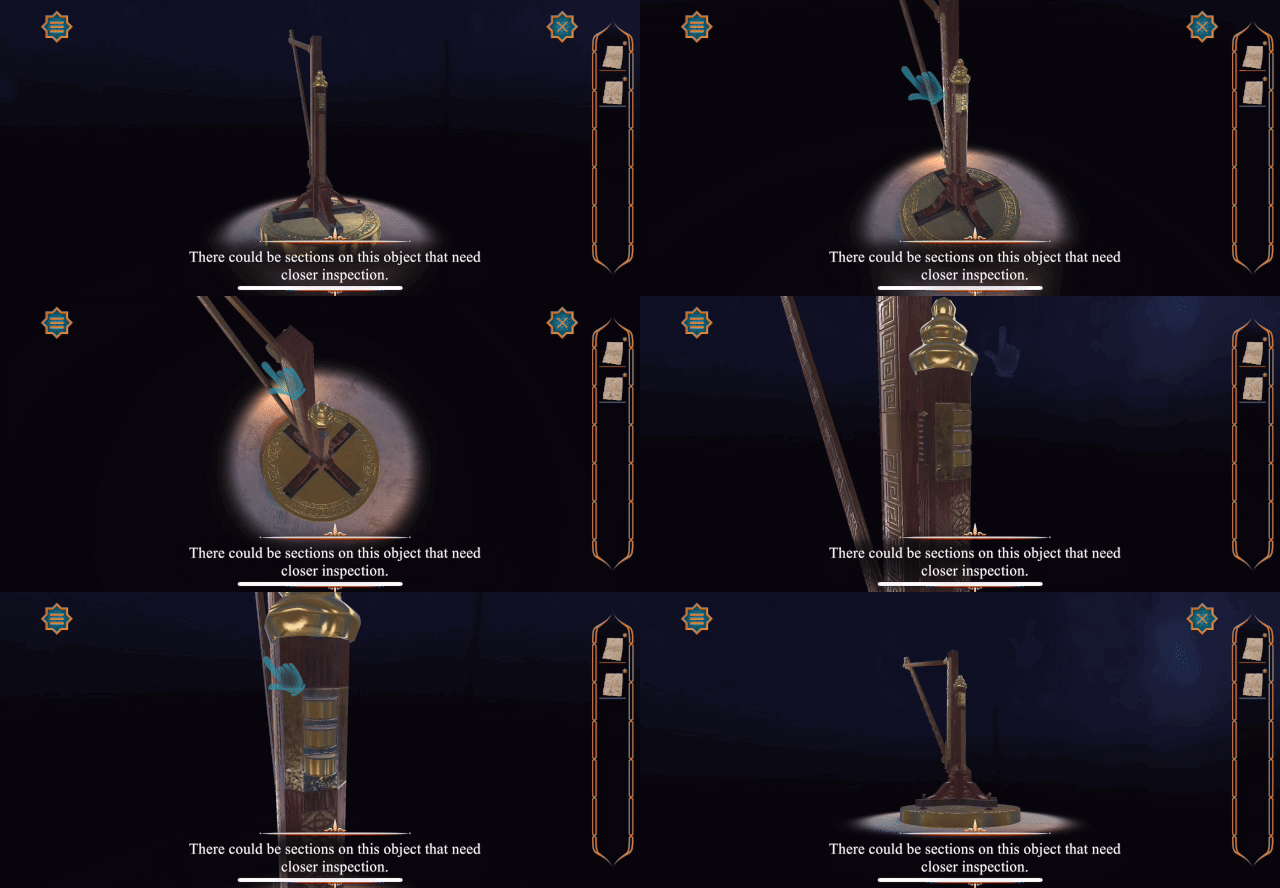
Original inventory system, annotated
The current inventory provides insufficient information for players to confidently identify,
understand,
and apply collected objects within puzzle-solving contexts.
Design Goals
- • Help players confidently identify collected objects
- • Add context without removing the need for interpretation
- • Keep the interface uncluttered on small mobile screens
- • Reduce cognitive load while preserving immersion
- • Preserve the game's goals of exploration, challenge, and learning
Selected Direction
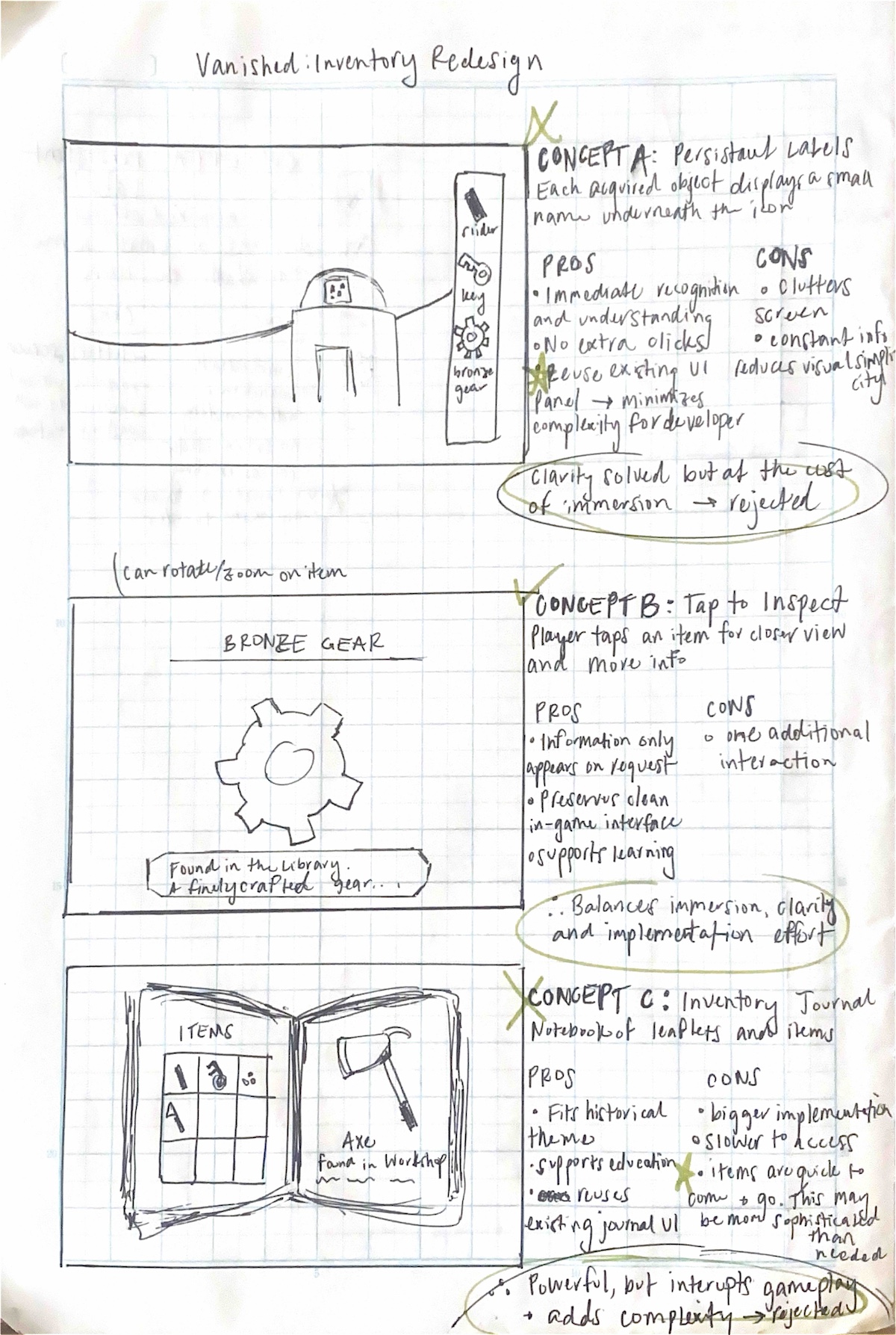
I chose tap-to-inspect because it surfaces contextual information only when requested, without breaking immersion. Persistent labels improved understanding but added clutter, especially on mobile. A full inventory journal offered richer educational content but was overbuilt for how simple most objects were, and risked slowing gameplay down. Tap-to-inspect supported the existing game rather than requiring new layers, while balancing clarity, player agency, and feasibility.
Reflection
Vanished reinforced that game design balances more than usability — technical limits, production constraints, narrative goals, and the emotional experience a game aims to create all shape the decision. Games ask players to spend time, not save it, which puts more weight on their actual wants than a productivity tool carries. Playtesting with real users surfaces things internal review and technical prediction alone can't. As a designer, I'm looking for the pivot point between clarity, challenge, discovery, and learning.
Project Status
Vanished Puzzle Quest released commercially in March 2026. I contributed through UX research, playtesting, and design exploration during development. The inventory redesign above was not implemented in the released game.