The Labyrinth
2026
Interaction Design, Narrative Systems, Production Collaboration
About
I worked with Digital Counsel to build an interactive digital commission for Hyundai Artlab, in
collaboration with artist Kyung-Me. Hyundai Artlab commissions original web-based works that
explore contemporary visual culture through interaction and storytelling. Our goal was to
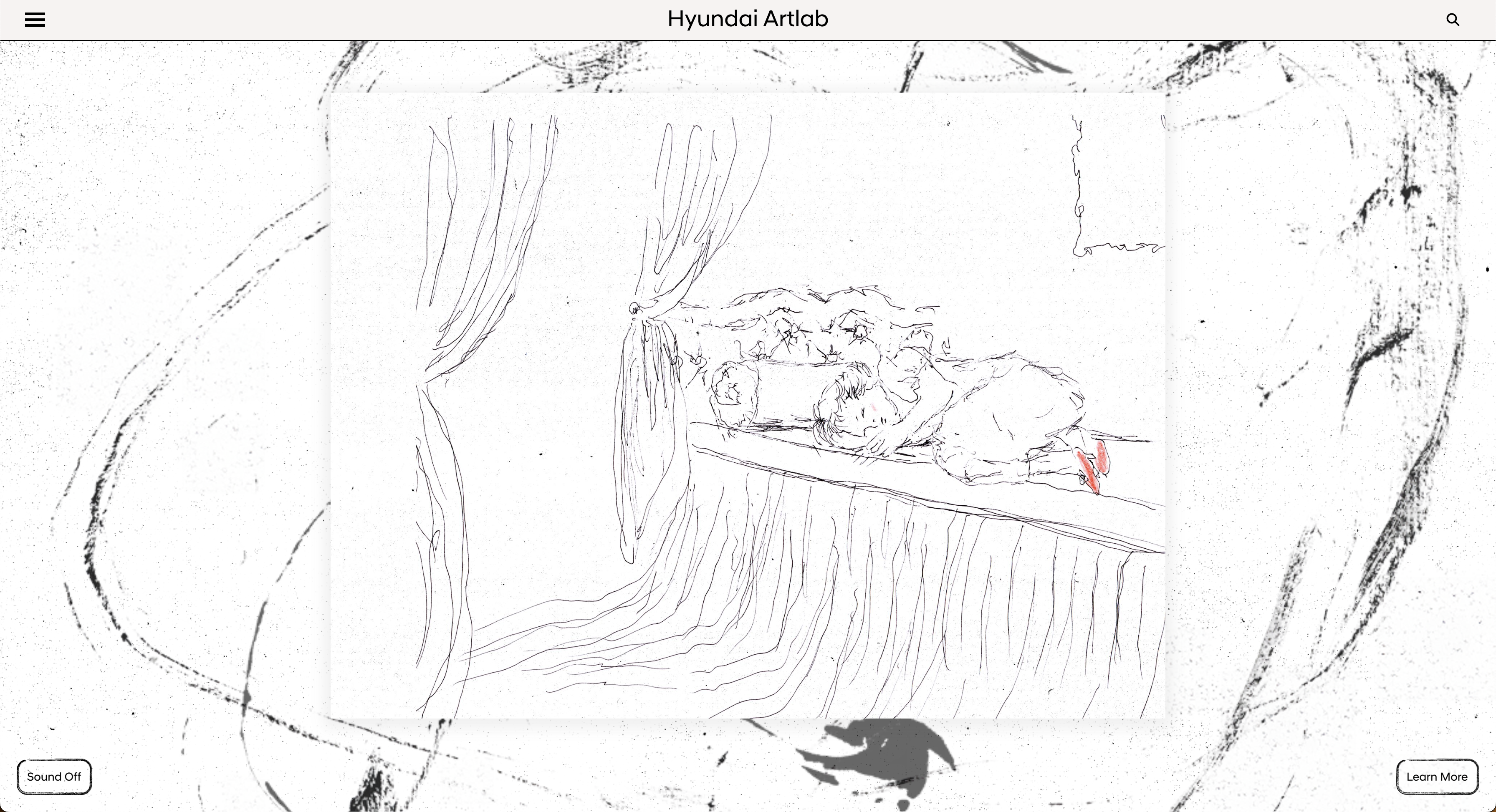
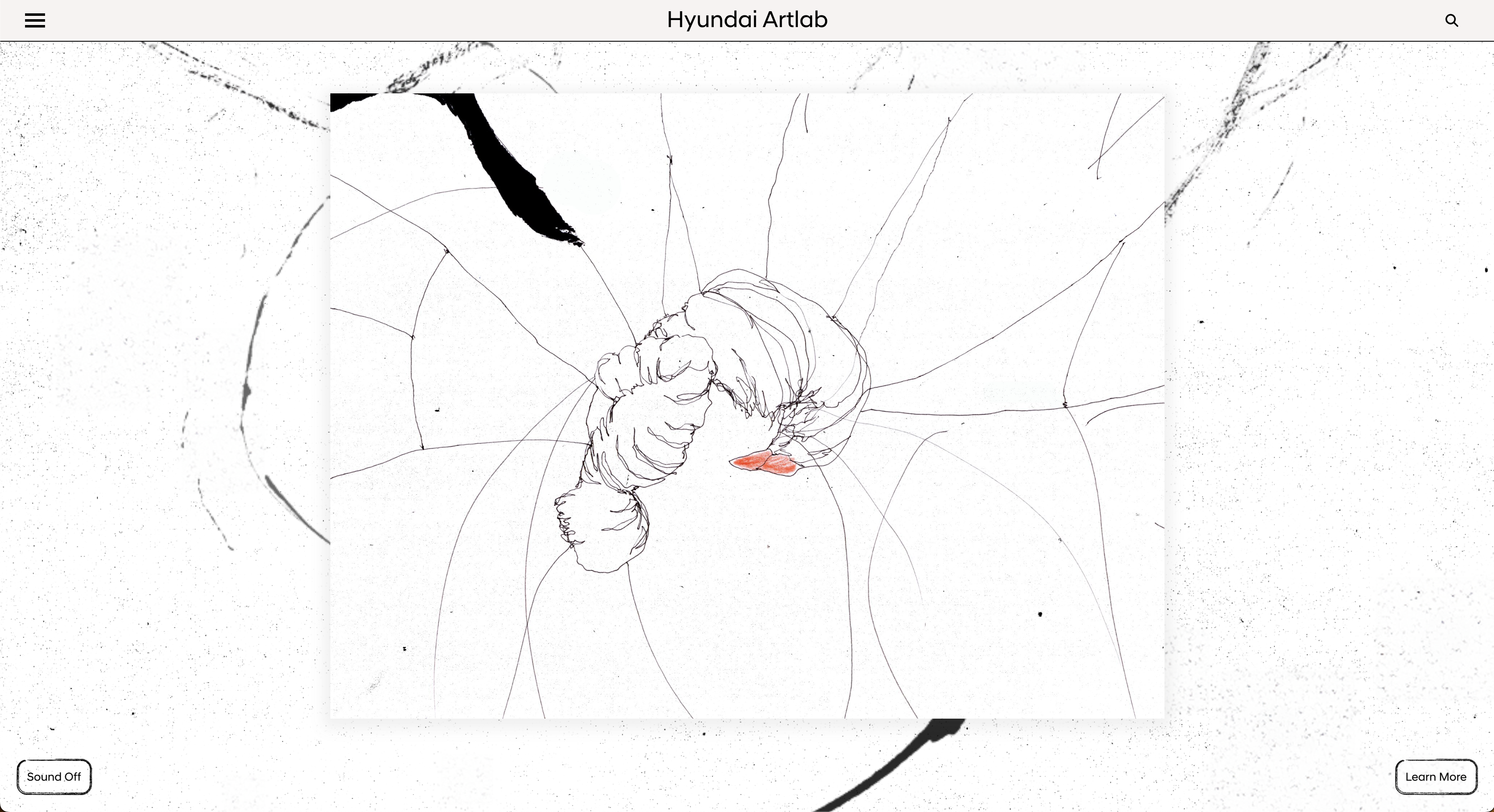
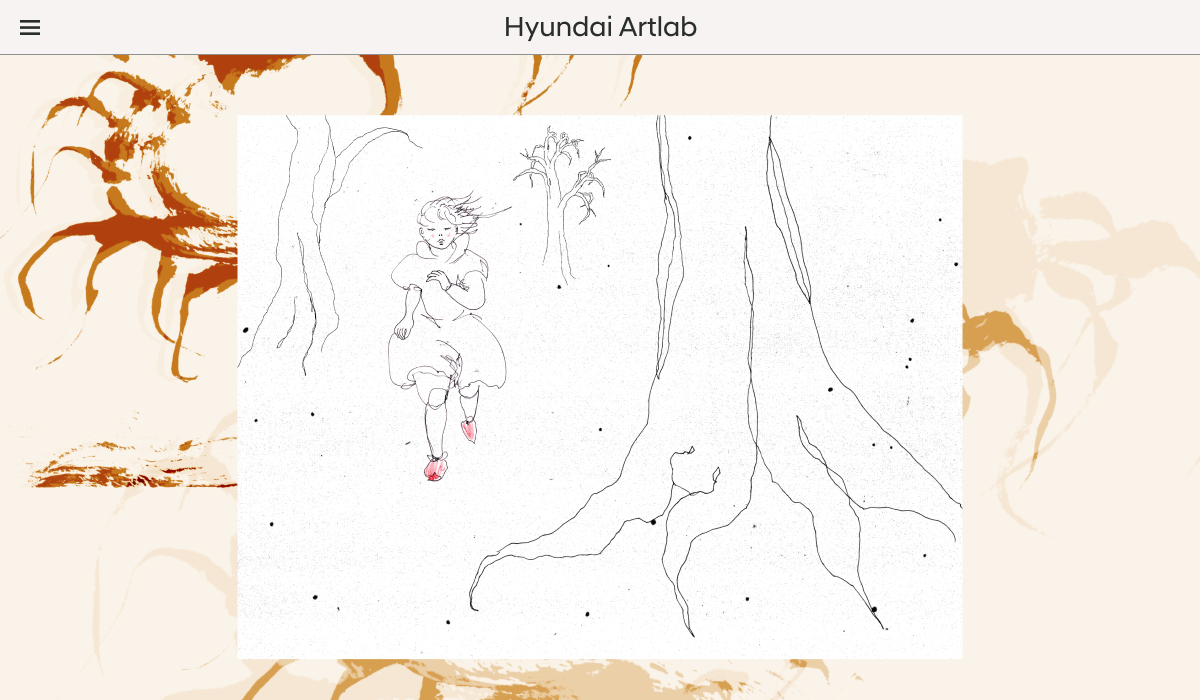
translate Kyung-Me's symbolic, reflective drawings into a digital experience — a nonlinear
scroll environment exploring repetition, transformation, memory, and cyclical self-reinvention —
while preserving the atmosphere and pacing of the original drawings and introducing interaction
and motion as narrative devices.
Visit
project here
→
Project Goals
- • Create a contemplative browsing pace, not rapid content consumption
- • Bridge interaction and narrative progression through scrolling and transitions
- • Preserve the drawings' emotional atmosphere in a digital medium
- • Balance experimentation with navigational clarity
- • Create a tactile and immersive interaction experience
- • Make individual drawings feel interconnected
My Role
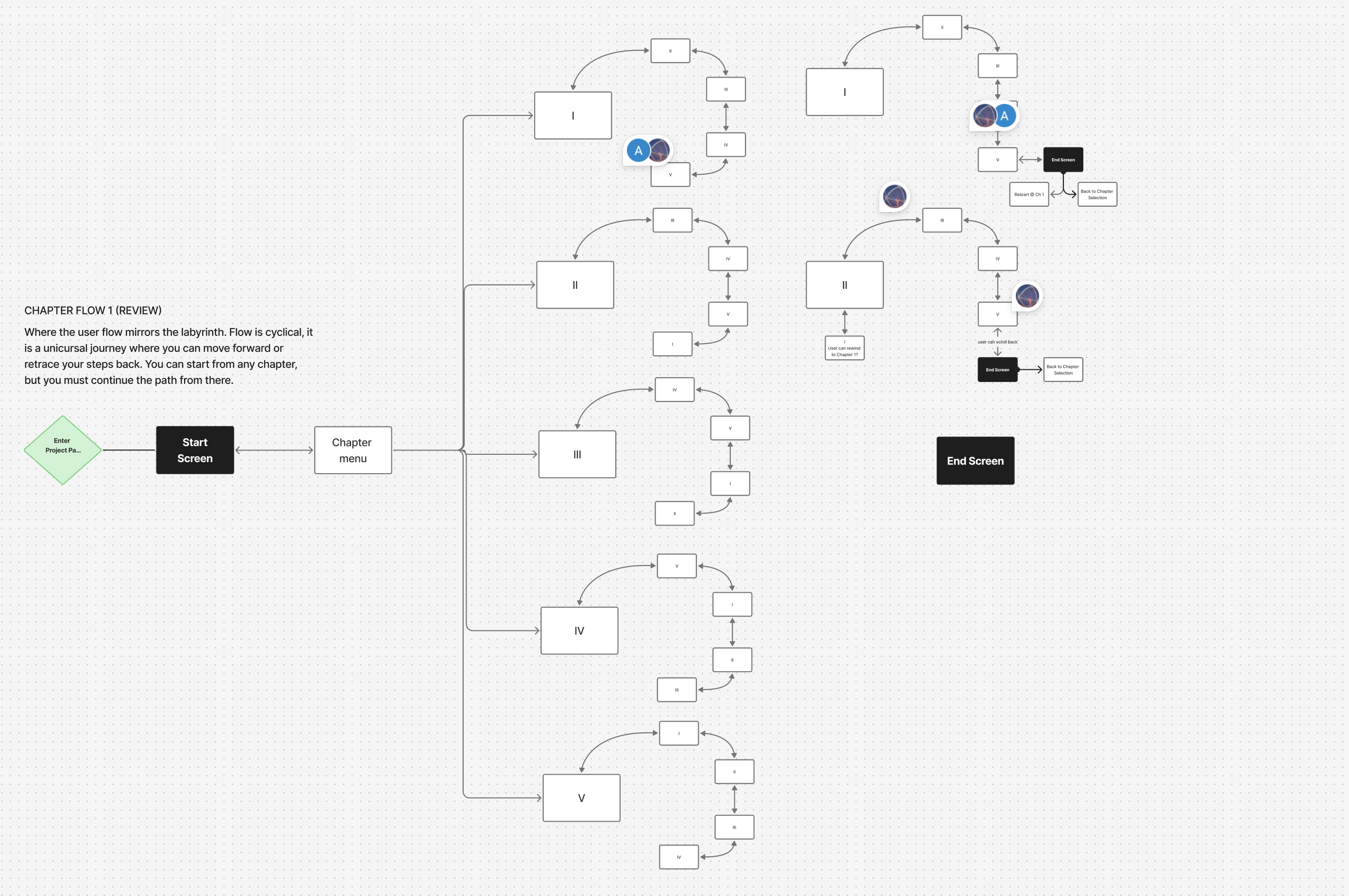
- • Designed interaction frameworks and narrative navigation systems for the piece
- • Built wireframes, responsive layouts, and interaction flows across desktop and mobile within Hyundai Artlab's brand system
- • Defined scrolling behavior, transitions, pacing, progress indicators, and intro/outro sequences
- • Translated abstract artistic themes into interaction patterns and navigable sequences
- • Collaborated with stakeholders, developers, and the artist through concept and implementation
Constraints, and what didn't survive them
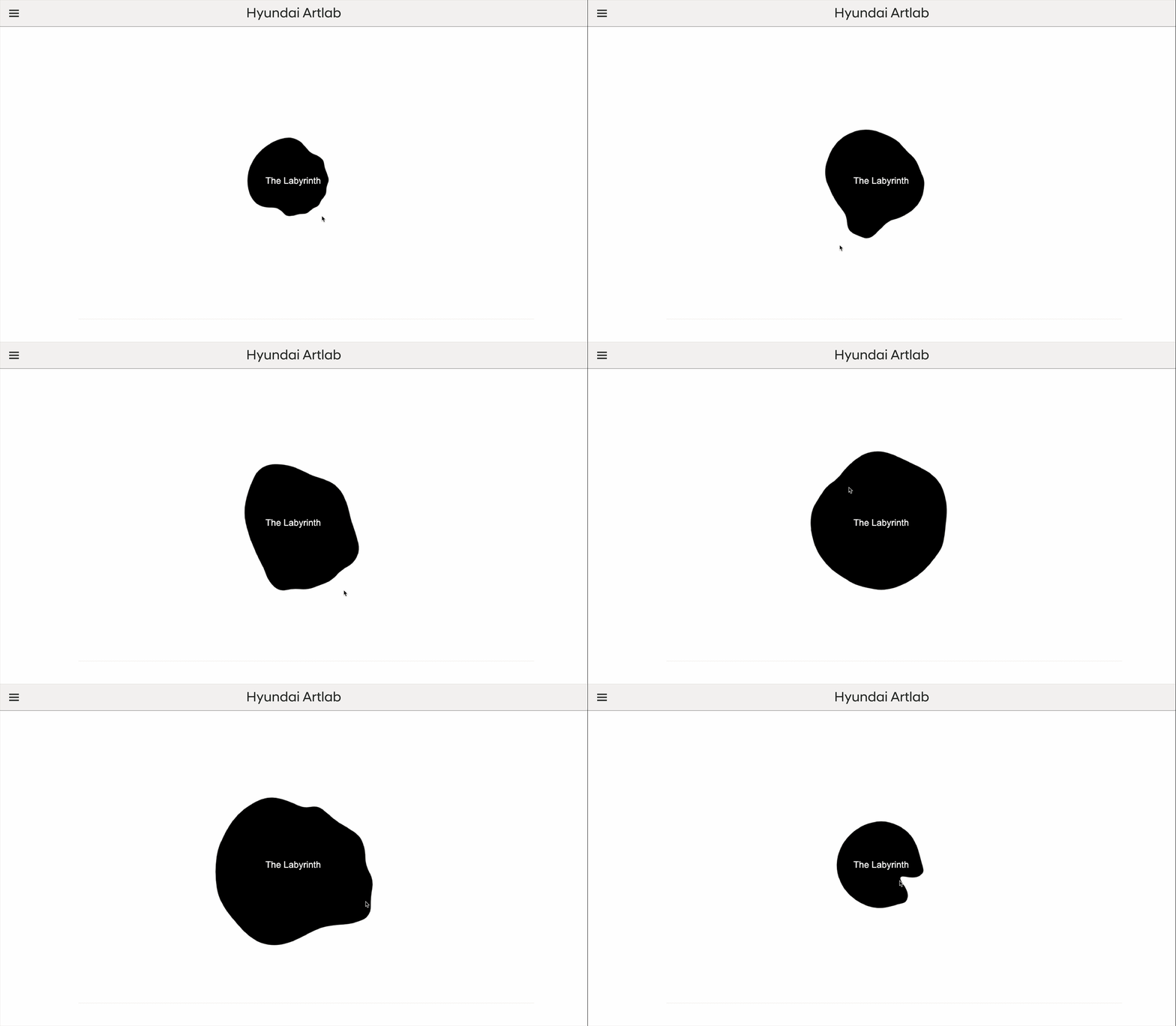
This project meant designing experimental, atmospheric interactions within the real limits of a browser-based build. Some motion and interaction concepts I proposed were too complex for the technical implementation to fully support, and production timelines and stakeholder decisions narrowed several of the more experimental directions before they reached development. Throughout, I was balancing that ambiguity and experimentation against usability, navigational clarity, and keeping the experience responsive across desktop and mobile. A few early interaction and motion concepts didn't make it past this stage — some are below.
Reflection
Working on The Labyrinth meant conveying someone else's artistic vision through a real production pipeline — client, artist, developers, and a browser's technical limits, all at once. A lot of the actual design work wasn't inventing new interactions, it was deciding what to fight for and what to let go of as the project moved from concept to build. If I revisited it, I'd push further on motion systems, sound integration, and a bookmarking feature to let viewers return to the work more deliberately — ideas that were part of my original proposal but didn't make it into what shipped.